
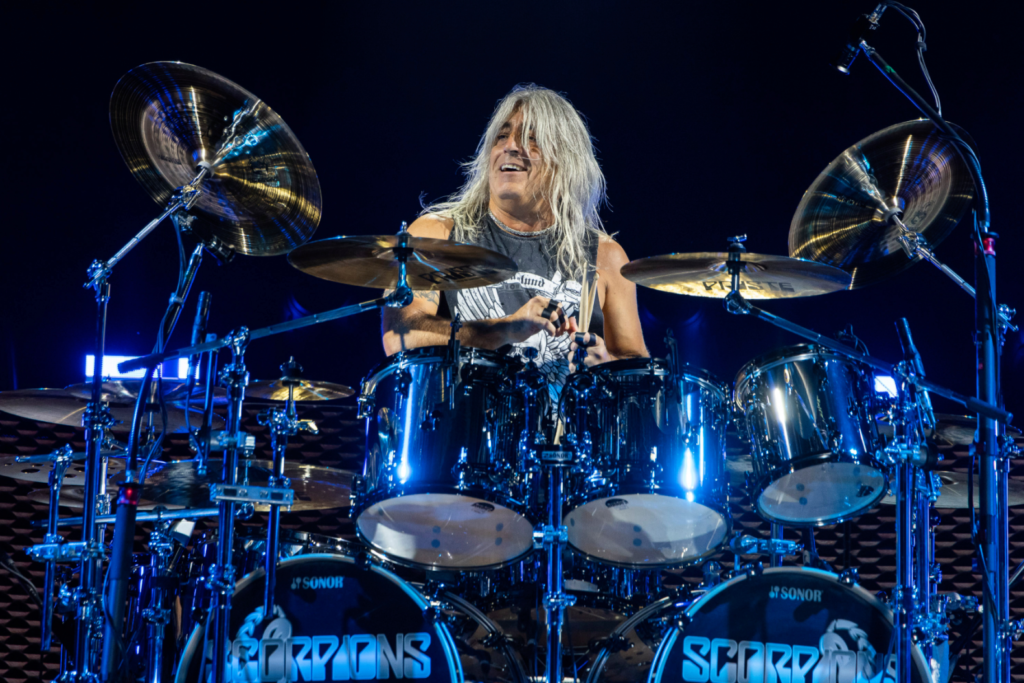
Mikkey Dee – The Unsung Architect of Progressive Metal Drumming
Mikkey Dee has carved out a legacy that shaped the evolution of progressive and metal drumming in ways few fully recognize.
When conversations turn to influential drummers in the metal world, names like Neil Peart, Mike Portnoy, and Tomas Haake often dominate the spotlight. Yet quietly—and powerfully—Mikkey Dee has carved out a legacy that shaped the evolution of progressive and extreme metal drumming in ways few fully recognize. Known for his explosive precision, fluid musicality, and relentless energy, Dee’s work pushed the boundaries of what was rhythmically possible in heavy music long before it became mainstream.
A Swedish Powerhouse with a Global Reach
Born Micael Kiriakos Delaoglou in Gothenburg, Sweden, Mikkey Dee’s musical journey began in the late 1970s. His early career blossomed with King Diamond in the 1980s, where his playing became a defining feature of the band’s theatrical and technically demanding sound. Dee’s drumming on albums like “Fatal Portrait” (1986) and especially “Them” (1988) set a new benchmark for how precision, speed, and progressive arrangements could coexist within heavy metal.
Unlike many metal drummers of his era, Dee approached his kit with a fusion of jazz technique and hard rock aggression. His use of complex cymbal work, dynamic ghost notes, and polyrhythmic layering brought a level of musicality that went far beyond simple blast beats or double bass patterns. Every fill served the song, but also expanded its rhythmic landscape.
Technical Genius: Precision Meets Personality
One of Mikkey Dee’s greatest contributions to progressive metal drumming is his ability to inject personality into extreme precision. He mastered intricate time signatures and shifting grooves without making them sound mechanical. Listen to “Welcome Home” by King Diamond—his rapid-fire tom fills and evolving ride patterns aren’t just technically impressive; they give the song its narrative drive, almost like a character in the story.
His footwork deserves equal praise. Dee’s double bass playing was crisp, articulate, and locked in with surgical accuracy, but he used it selectively. Instead of filling every bar with relentless kick patterns, he deployed double bass as a compositional tool—creating tension, accentuating climaxes, and propelling riffs forward.
Influence Beyond His Bands
Though possibly best known for his later tenure with Motörhead (1992–2015) and most recently, the Scorpions, Dee’s earlier progressive approach laid the groundwork for a generation of drummers who would dominate progressive and technical metal in the 1990s and 2000s. Artists in bands like Dream Theater, Opeth, and Symphony X often cite European metal’s rhythmic innovations as a key influence—and Dee’s drumming with King Diamond was at the epicenter of that wave.
His knack for seamlessly blending theatrical flair with jaw-dropping technique influenced countless younger drummers to think beyond rigid rhythmic frameworks. In many ways, he was a bridge between the classic rock virtuosity of drummers like Ian Paice and the ultra-technical world of modern progressive metal.
Live Energy: A Lesson in Stamina and Showmanship
While studio recordings show his technical mind, Mikkey Dee’s live performances cemented his reputation. Watching him play was like witnessing a controlled explosion—effortless stick control paired with immense power. His drum solos were never mere displays of chops; they were structured compositions in their own right, evolving in intensity and pulling the audience into a rhythmic journey.
During his years with Motörhead, he adapted his style to suit the band’s raw, no-frills energy, proving his versatility. Yet even there, his fills, cymbal flourishes, and footwork elevated songs like “Sacrifice” and “In the Name of Tragedy” to new rhythmic heights. He managed to keep Motörhead’s primal force intact while quietly infusing a progressive sensibility beneath the surface.
Legacy: A Progressive Mind in a Metal Legend’s Body
Mikkey Dee rarely gets mentioned in the same breath as the “prog gods,” but his impact is undeniable. His early innovations paved the way for technical drumming in metal to be expressive rather than clinical. He combined rock bravado, jazz finesse, and metal ferocity into a unique style that resonates decades later.
As modern metal continues to evolve, Dee’s fingerprints are everywhere—in the intricate cymbal textures of modern prog bands, the narrative use of drums in concept albums, and the balance of precision with personality in top-tier metal drumming.
Mikkey Dee wasn’t just keeping time. He was rewriting it.